
How to Store Sports Cards Safely: A Collector's Guide
How to store sports cards safely: humidity and temperature targets from conservators, sleeves to vaults, graded slab care and protecting high-value cards.
A card's grade depends on its corners, edges, surface and centering, and only one of those is fixed at the factory. Corners, edges and surface can all be damaged by poor storage. For high-end basketball cards, where one grade point can be worth thousands of dollars, storage is part of protecting the asset. This guide covers how to store sports cards safely, using environmental guidance from professional paper conservators and practical steps from sleeve to vault.
Note: trading-card-specific environmental standards are not widely published. The targets below come from the Northeast Document Conservation Center (NEDCC), a leading paper-preservation authority, adapted for cardboard collectibles.
The Environment: Humidity, Temperature and Light
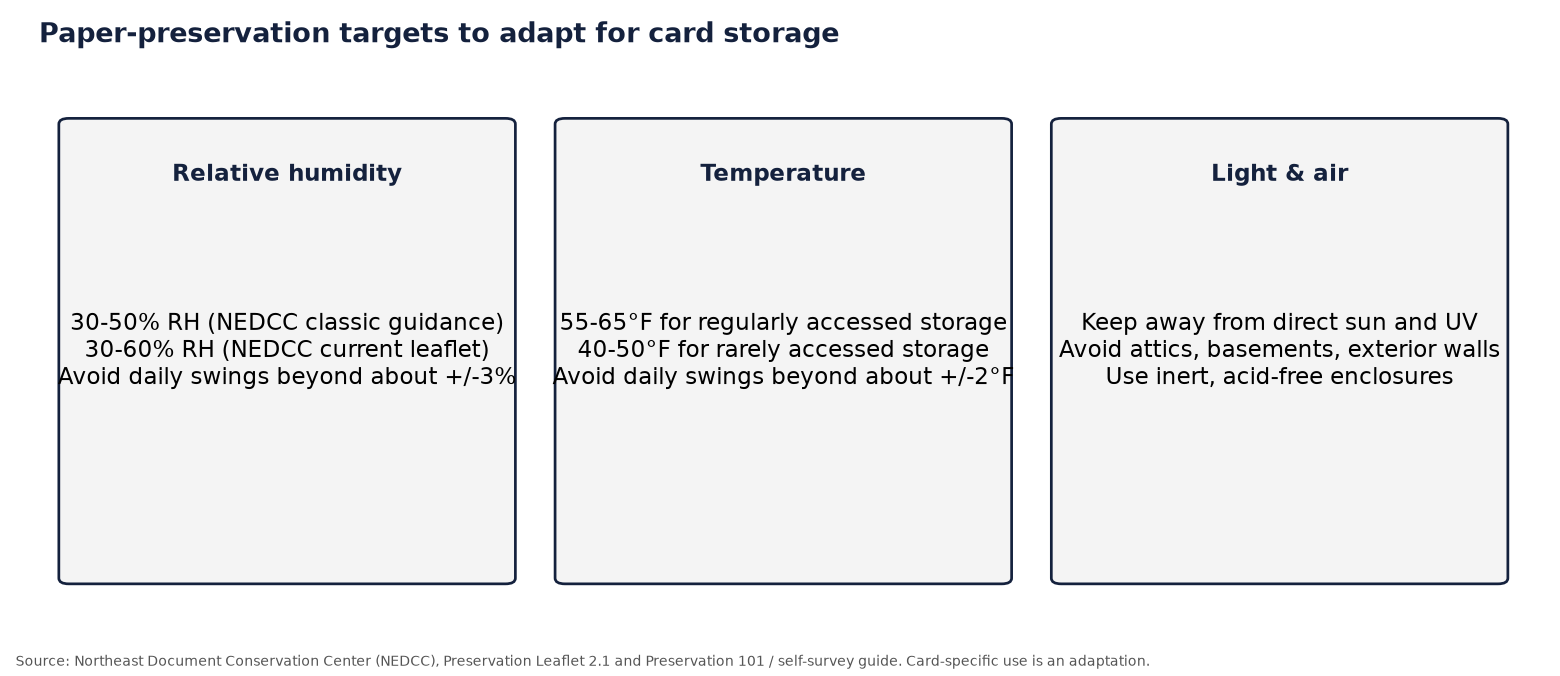 Figure 1: Environmental targets from NEDCC paper-preservation guidance, adapted for card storage.
Relative humidity (RH)
NEDCC's current preservation leaflet recommends roughly 30–60% RH for paper collections. Its older self-survey guidance gives a tighter 30–50%. High humidity encourages mold and warping, and very low humidity can make paper brittle. For cardboard cards, aim for the middle of that range.
Temperature
NEDCC suggests about 55–65°F for collections you access regularly and cooler conditions (40–50°F) for storage you rarely open. Most collectors keep cards in a climate-controlled living space at a steady, moderate temperature.
Stability matters as much as the number
NEDCC's guidance stresses avoiding swings, about ±2°F and ±3% RH per day. Repeated expansion and contraction stresses paper. That matters for cards with chromium layers, embedded patches and thick stock.
Light and air
Keep cards away from direct sunlight and UV, which fade inks and autographs. Avoid attics, basements, garages and exterior walls, where temperature and humidity change the most.
The Storage Stack: From Sleeve to Vault
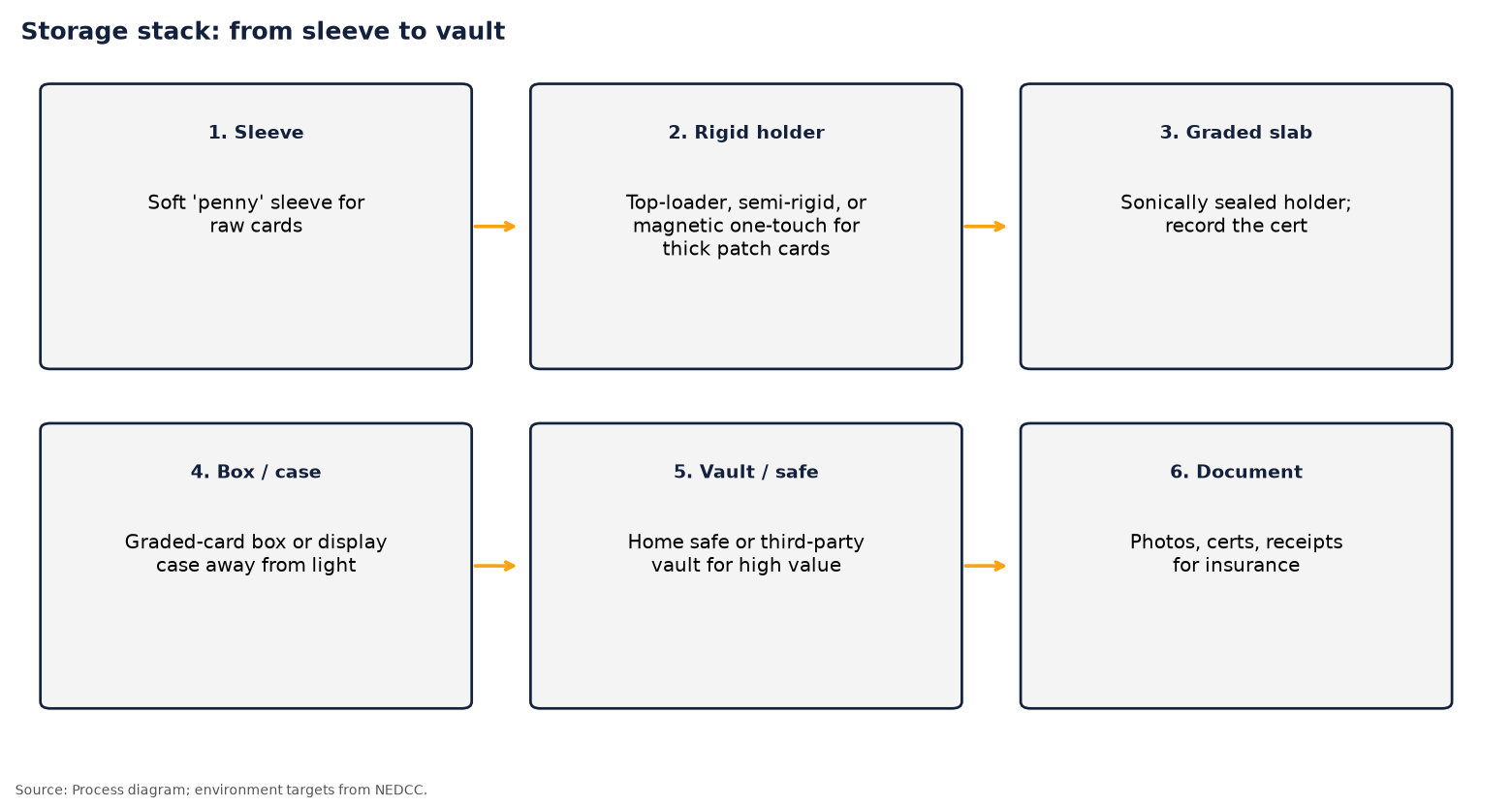 Figure 2: Storage layers for raw and graded cards.
1. Soft sleeves
Put raw cards into soft sleeves right away to protect the surface from scratches and fingerprints.
2. Rigid or semi-rigid holders
Top-loaders and semi-rigid holders keep cards from bending. For thick patch and autograph cards, such as RPAs and Logomans, use holders sized for the card's thickness, or magnetic one-touch holders, so the card is not squeezed.
3. Graded slabs
A sealed holder from PSA, BGS or SGC protects the card and records its grade and authenticity. Slabs can still crack or scratch, so store them upright in purpose-made graded-card boxes or display cases, and do not stack them loosely.
4. Boxes and display cases
Use sturdy, inert storage boxes. If you display cards, choose UV-protective cases and keep them out of direct light.
5. Safes and third-party vaults
For high-value cards, consider a fire- and water-resistant home safe, or a professional vault. Several marketplaces now offer vaults: PSA acquired the eBay vault in 2024 (eBay Inc.), and Fanatics Collect runs the former PWCC vault (Fanatics Collect). Vaulting can also make selling easier, because cards can be listed without being shipped.
6. Documentation
Photograph each card front and back, record cert numbers and keep purchase records. These help with insurance claims and resale. See sports card insurance.
Handling Rules That Protect Grades
- Wash and dry your hands before handling raw cards, or wear clean, lint-free gloves.
- Hold cards by the edges. Never touch the surface or press on the corners.
- Work over a clean, soft surface so a dropped card does not land on a hard edge.
- Never clean, press or "fix" a card. PSA treats cleaning (N7) and altered stock such as crease pressing (N5) as reasons it will not grade a card.
- Avoid rubber bands, paper clips and tight binders for valuable cards.
- Move cards straight from pack to sleeve to keep Gem Mint potential. See the PSA grading scale for what graders look for.
Special Cases
Autographed cards
Ink is sensitive to light. Keep signed cards out of direct sunlight and in UV-protective holders if they are on display.
Patch and memorabilia cards
Thick cards with embedded fabric are sensitive to pressure and humidity. Use holders that fit properly, and keep humidity stable.
Chromium and refractor cards
Surfaces scratch easily, and some modern chromium cards can curl as their layers react to humidity. Stable conditions and a snug holder help.
Slabs on display
Rotate displayed cards and keep them away from windows and heat sources such as lamps and vents.
Home Storage vs Professional Vaults
| Factor | Home storage | Professional vault |
|---|---|---|
| Control over the environment | Depends on your home; use a hygrometer | Usually climate-controlled (confirm with the provider) |
| Theft and fire risk | Reduced with a safe; depends on location | Professional security; check insurance terms |
| Access | Immediate | Request-based; shipping required |
| Selling | Ship to an auction house | Often list directly from the vault |
| Cost | One-time equipment | Ongoing fees (check provider terms) |
Planning for Emergencies
Fire, flood and theft are the losses that storage alone cannot prevent, so plan ahead.
- Keep cards off the floor and away from water pipes, water heaters and windows.
- Use waterproof containers inside a safe, or a safe rated for both fire and water.
- Split very large collections between home and a vault, so one event cannot destroy everything.
- Keep an off-site copy of your inventory, with photos, cert numbers and receipts, in cloud storage.
- Know your insurance coverage. Standard homeowners policies often have low limits for collectibles. The Insurance Information Institute recommends scheduling high-value items, which our insurance guide explains.
A Simple Monitoring Routine
- Keep a digital hygrometer and thermometer where cards are stored.
- Check it monthly, and after weather changes or HVAC problems.
- Inspect a sample of slabs and holders twice a year for cracks, curling or condensation.
- Update your inventory and photos whenever you add or sell a card.
Mistakes That Cost Collectors Money
- Storing cards in a basement, attic or garage.
- Displaying signed cards in direct sunlight.
- Forcing thick patch cards into standard top-loaders.
- Stacking slabs loosely so they scratch or crack.
- Trying to clean or flatten a card before grading.
- Keeping no photos or records for insurance.
For long-term holders, storage goes hand in hand with insurance and record-keeping. See investing in basketball cards. If you are preparing cards for submission, read how to grade basketball cards.
FAQ
What humidity is best for storing sports cards?
Conservators at NEDCC recommend about 30–60% relative humidity for paper collections (30–50% in older guidance), kept stable. Aim for the middle of that range for cards.
What temperature should I store cards at?
A stable, moderate temperature. NEDCC suggests about 55–65°F for collections you access regularly. Avoid large daily swings.
Are top-loaders safe for valuable cards?
Yes, for standard-thickness cards in a sleeve. Thick patch cards need holders sized for their thickness, or magnetic holders.
Should I keep graded cards in a vault?
For very valuable cards, a professional vault or a home safe adds protection. Marketplace vaults such as PSA's and Fanatics Collect's also make it easier to sell.
Can storage damage a graded card?
The slab protects the card, but heat, light and impact can still cause harm, from fading autographs to cracked holders. Store slabs upright in boxes or cases, away from light and heat.
Related Articles (Internal Links)
- Sports Card Insurance: How to Protect Your Collection
- How to Grade Basketball Cards: Is It Worth It?
- PSA Grading Scale Explained: 1 to Gem Mint 10
- Investing in Basketball Cards: Risks and Real Returns
- How to Spot Fake Graded Cards and Altered Slabs
Sources
- NEDCC, Preservation Leaflet 2.1, "Temperature, Relative Humidity, Light, and Air Quality: Basic Guidelines for Preservation". https://www.nedcc.org/free-resources/preservation-leaflets/2.-the-environment/2.1-temperature%2C-relative-humidity%2C-light%2C-and-air-quality-basic-guidelines-for-preservation
- NEDCC, Assessing Preservation Needs: A Self-Survey Guide (PDF). https://www.nedcc.org/assets/media/documents/apnssg.pdf
- PSA, "Grading Standards". https://www.psacard.com/gradingstandards
- eBay Inc., "eBay, Collectors Enter into Commercial Agreement, Sign Deals for Acquisition of Goldin by eBay and Acquisition of the eBay Vault by PSA" (Apr 10, 2024). https://investors.ebayinc.com/investor-news/press-release-details/2024/eBay-Collectors-Enter-into-Commercial-Agreement-Sign-Deals-for-Acquisition-of-Goldin-by-eBay-and-Acquisition-of-the-eBay-Vault-by-PSA/default.aspx
- Fanatics Collect newsroom, "PWCC is now Fanatics Collect". https://www.fanaticscollect.com/newsroom/pwcc-is-now-fanatics-collect
- Insurance Information Institute (Triple-I), "Insurance for Your House and Personal Possessions". https://www.iii.org/article/insurance-for-your-house-and-personal-possessions
Figures are reported prices from the cited sources at the time of research (October 2026). Private-sale prices are as reported and were not independently audited. Nothing here is financial advice.